
Frankston · Filed at the Dandenong registry
Separating is the hard part. The process should at least be predictable.
This site sets out how a family law matter actually moves in Victoria: the mediation certificate you need before a court will hear a parenting application, where Frankston matters are filed, what the court events are called and what they decide, and how long each part realistically takes.
Free initial conference for most matters.
The firm
Bayside Solicitors has practised family law from Frankston since 1998. 28 years of it, 60,000+ matters resolved across the firm, and the largest firm on the Mornington Peninsula.
We act for you at mediation and in court. We do not act as the mediator.
What this site is
The mechanics, not the sales pitch
The firm's main site explains what we do in family law. This one explains what the system does: what each step is called, what it is for, what it costs, and how long it takes.
People rarely arrive at a family lawyer confused about their own situation. They arrive confused about the machinery around it. What a section 60I certificate is and why nobody mentioned it until now. Which court a Frankston matter even goes to, given there is no family court in Frankston. What a first return date is. Whether the twelve months runs from the separation or the divorce.
Those are answerable questions and the answers do not change much from matter to matter, so they are set out here properly rather than being the first twenty minutes of a conference you are paying for.
Bayside Solicitors has practised family law from Frankston since 1998. Our family lawyers appear at the Dandenong registry themselves. We act for clients at mediation and we put real resources into that stage, because for most separating couples mediation is where the matter actually settles, on terms they had a say in rather than terms imposed on them. We do not act as mediators and none of our solicitors is an accredited mediator.
This is general information about family law procedure in Australia, current at the date it was written. It is not legal advice and your circumstances will change parts of it.
Separation to final orders
Five stages, and where most matters finish
Very few family law matters reach a final hearing. Knowing which stage you are at tells you what is still open to you and what the next date is for.
- 01
Separation, and the date it happened
You can be separated and still living under one roof, but the date matters and you may later have to prove it. It starts the twelve month clock for a divorce application, and it is a reference point for property matters. Write down when it happened and what changed, while you still remember clearly.
- 02
Disclosure and advice, before positions harden
Family law runs on financial disclosure: bank statements, superannuation, tax returns, valuations, liabilities. The duty is ongoing and it applies whether or not anyone has gone to court. Matters that get expensive are almost always matters where disclosure was resisted at the start.
- 03
Family dispute resolution
For parenting matters, mediation with a registered family dispute resolution practitioner is compulsory before you can apply to a court, with exceptions. It produces a section 60I certificate. For property matters there is no certificate, but the court still expects a genuine attempt to resolve before you file.
- 04
Agreement, or an application
Most matters resolve without a contested hearing. An agreement can be formalised as consent orders, which the court makes without anyone attending, or for financial matters as a binding financial agreement. If it cannot be agreed, an application is filed and the matter enters the court's case management pathway.
- 05
Court events, then final orders
A filed matter moves through a sequence of listed events, each with a defined purpose, before any final hearing. Most matters still settle somewhere along that path, often at the court-ordered dispute resolution event, and are finalised by consent.
How we work
Resolving matters at mediation
Before a court will hear most family law disputes, the parties have to attempt mediation. It is not a formality on the way to a hearing.
For most separating couples, family dispute resolution is the point where the matter actually settles. We put genuine resources into that stage: going in with your position properly prepared, your financial disclosure in order, and a clear sense of what you can and cannot accept, rather than treating the day as a box to tick.
Matters that settle at mediation usually settle faster and cost less, and leave you with an outcome you had a hand in shaping. Where mediation does not resolve everything, it almost always narrows what is left, and a narrower matter is a cheaper and shorter one.
We act for you at mediation. We do not act as the mediator, and no solicitor at this firm holds accreditation as a mediator.
Free initial conference for most matters.
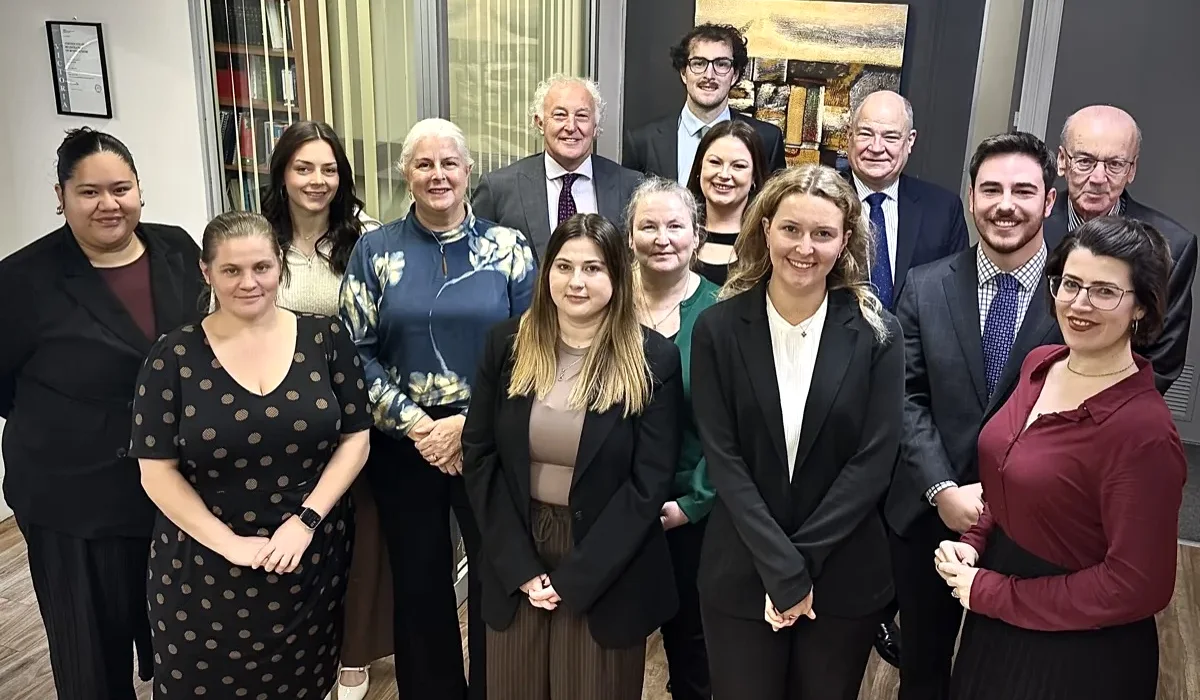
Who you’ll be dealing with
The same firm, the same office.
Bayside Solicitors has practised from Frankston since 1998. The family law division is not a separate business: it is the same firm, working from the same office at 36 Dandenong Road West.
Free initial conference for most matters. Come in and find out where you stand before you decide anything.
Common questions
Starting out
Do I have to go to court to sort out a separation?
No, and most people do not. The majority of family law matters are resolved by agreement and then formalised, either as consent orders filed with the court or, for financial matters, as a binding financial agreement. Court is what happens when agreement is not reachable, and even then most filed matters settle before a final hearing. Formalising an agreement still matters though: an informal arrangement is not enforceable and does not close off a later claim.
How long does a family law matter take?
It depends entirely on whether it is agreed. Consent orders can be filed and made within a couple of months. A divorce, once you are eligible to apply, is usually finalised within a few months of filing. A contested parenting or property matter that runs through the court's case management pathway is measured in many months to a couple of years, which is one of the strongest practical arguments for resolving it earlier.
Is there a time limit on property settlement?
Yes, and it catches people out. For married couples, an application for property settlement or spousal maintenance generally has to be made within twelve months of the divorce becoming final. For de facto couples the period is generally two years from the date of separation. Outside those periods you need the court's permission to apply, which is not automatic. If you are approaching either limit, that is a reason to get advice now rather than after.
Do we both need our own lawyer?
A lawyer cannot act for both of you, because your interests are not the same even when you are being amicable. One of you can be advised and the other can obtain independent advice, which is in any case required before a binding financial agreement is valid. Being represented separately does not make a matter adversarial. It usually makes an agreement stick.
Where to go next
Section 60I certificates
The mediation certificate you need before a court will hear a parenting application, and the exceptions.
The Dandenong registry
Where Frankston family matters are actually filed and heard, and what to expect on the day.
Applying for divorce
Eligibility, the 12 month separation rule, filing online, the fee, service, and the hearing.
What happens, and when
Filing to final orders through the court's case management pathway, with realistic timeframes.
Talk to us
Frankston office. Free initial conference for most matters.